
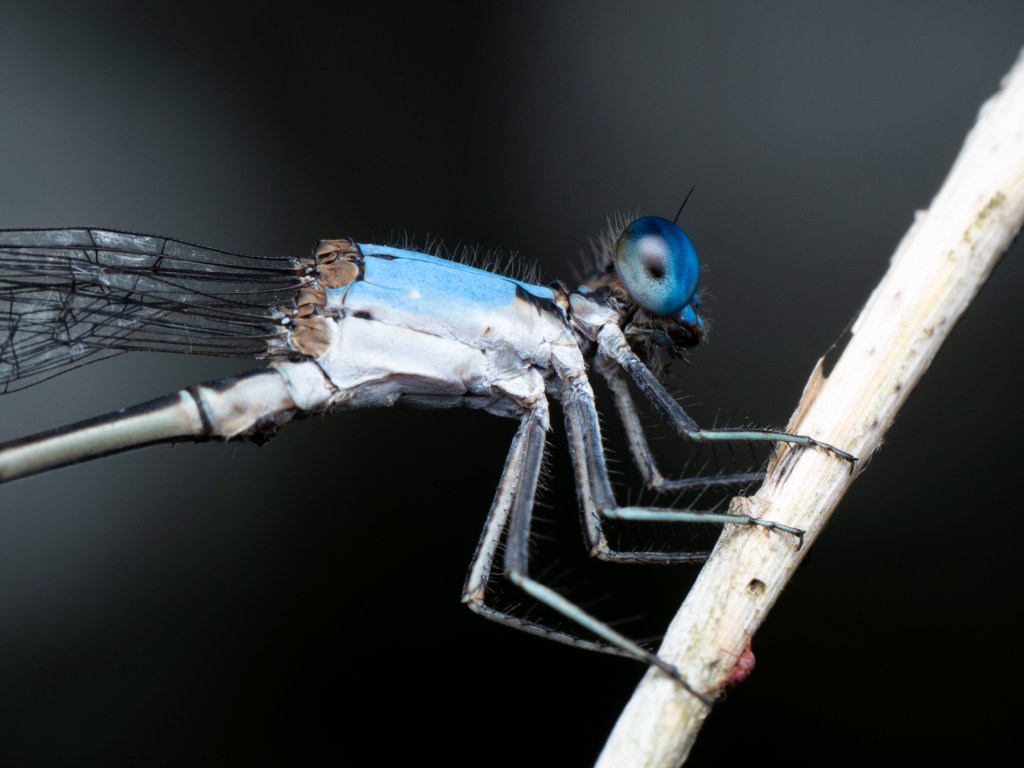
Both dragonflies (Anisoptera) and damselflies (Zygoptera) spend the majority of their lives in and around sources of freshwater. So, no matter what type of fresh bodies of water or wetlands you’re exploring, you might find these elegant, colorful flying insects buzzing nearby.
When discussing dragonflies and damselflies, the big question is always, “How do you tell them apart?”
Here are the main ways dragonflies and damselflies differ.
Body
When comparing dragonflies and damselflies, we can compare body size and shape.
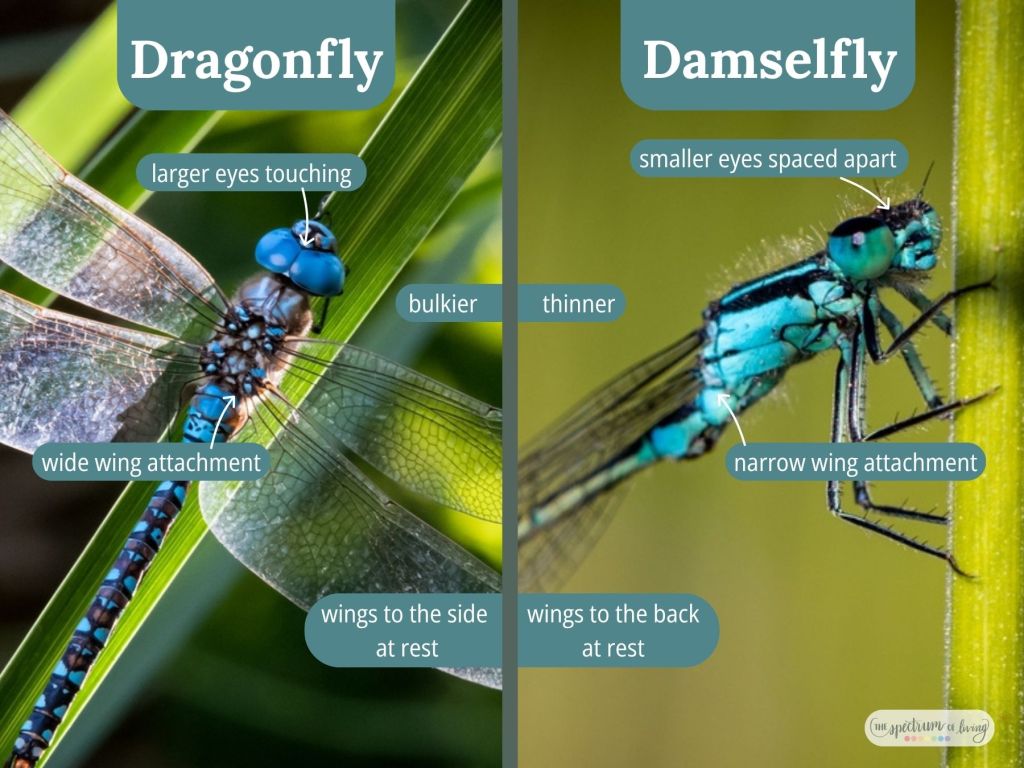
Dragonflies are usually bulkier with more robust bodies.
Damselflies tend to have thinner, more slender bodies and are usually longer.
Eyes
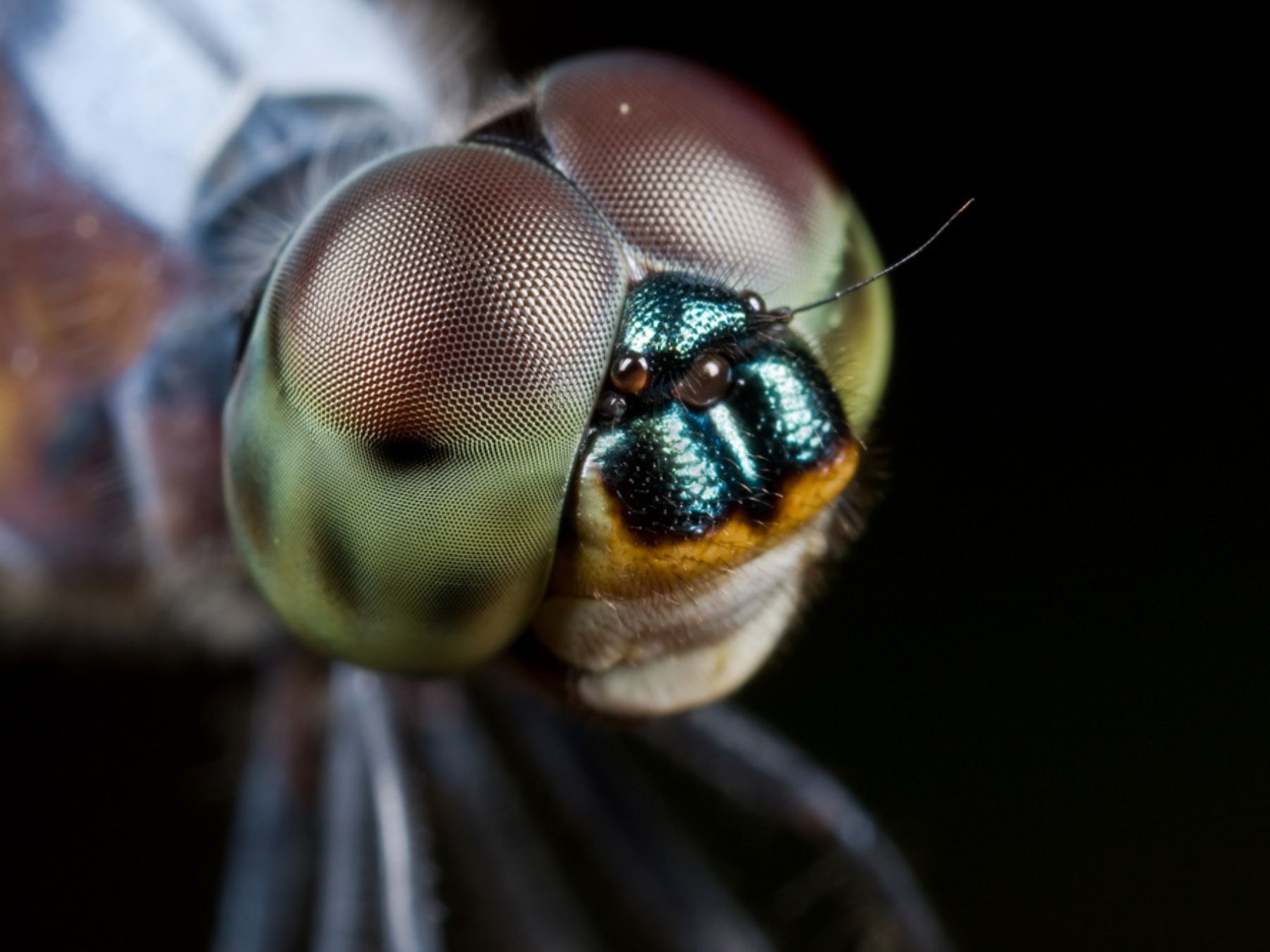
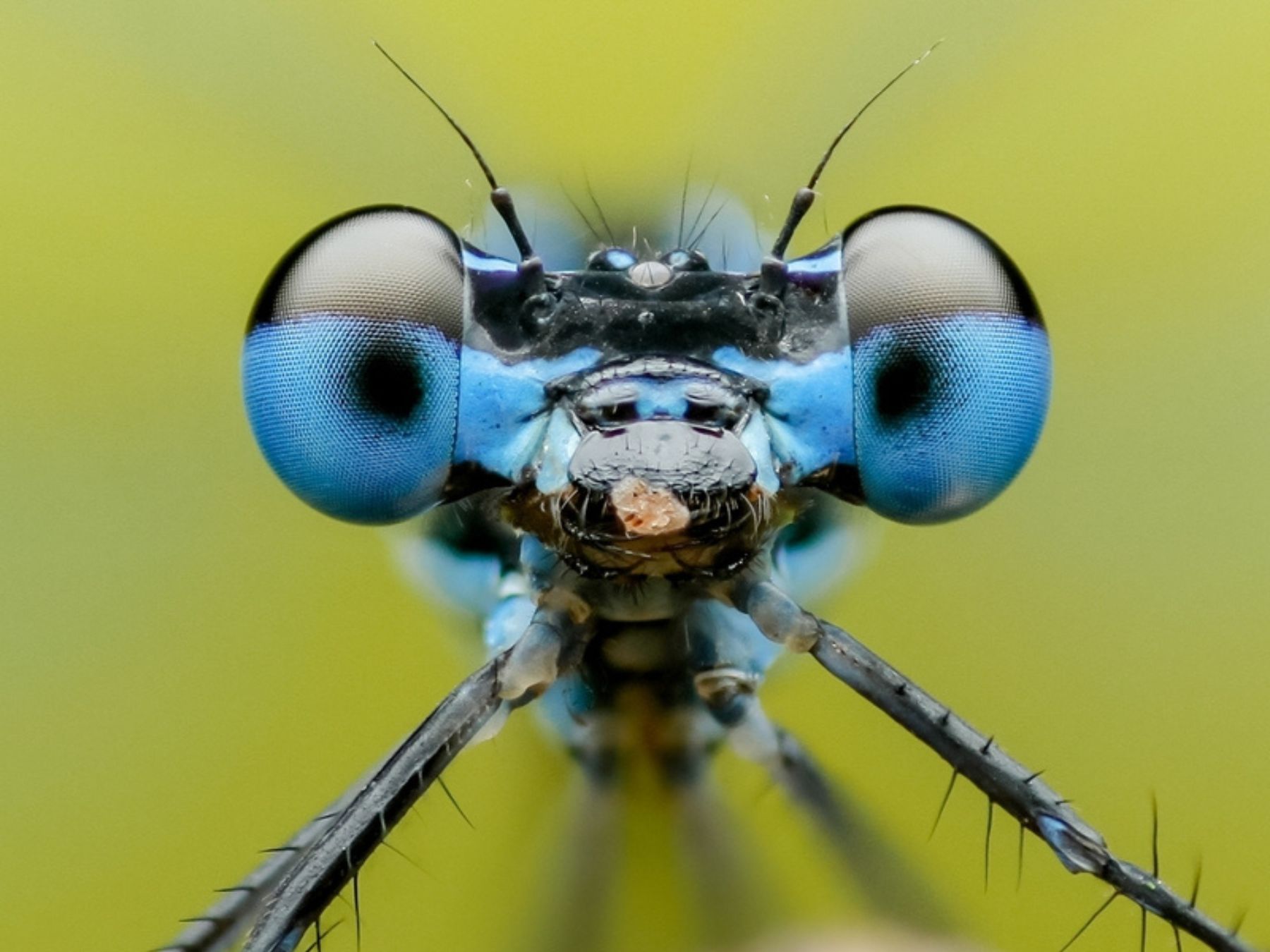
Eye size and spacing is the next characteristic we can analyze.
The eyes of dragonflies are larger, appearing to cover the majority of their heads. Their eyes often touch each other in the middle, or almost touch, near the top of their heads.
Damselfly eyes are smaller and separate, stretching farther towards either side of their heads.
By the way, when looking at eye placement, you can’t convince me the damselfly isn’t infinitely cuter than the dragonfly. The damselfly looks like a sweet guy who just wants to be my friend and laugh at my questionably funny jokes. The dragonfly makes me feel like he wants to bully me or just straight up ignore me. I don’t know about you, but that’s the energy they’re giving me.
Wings
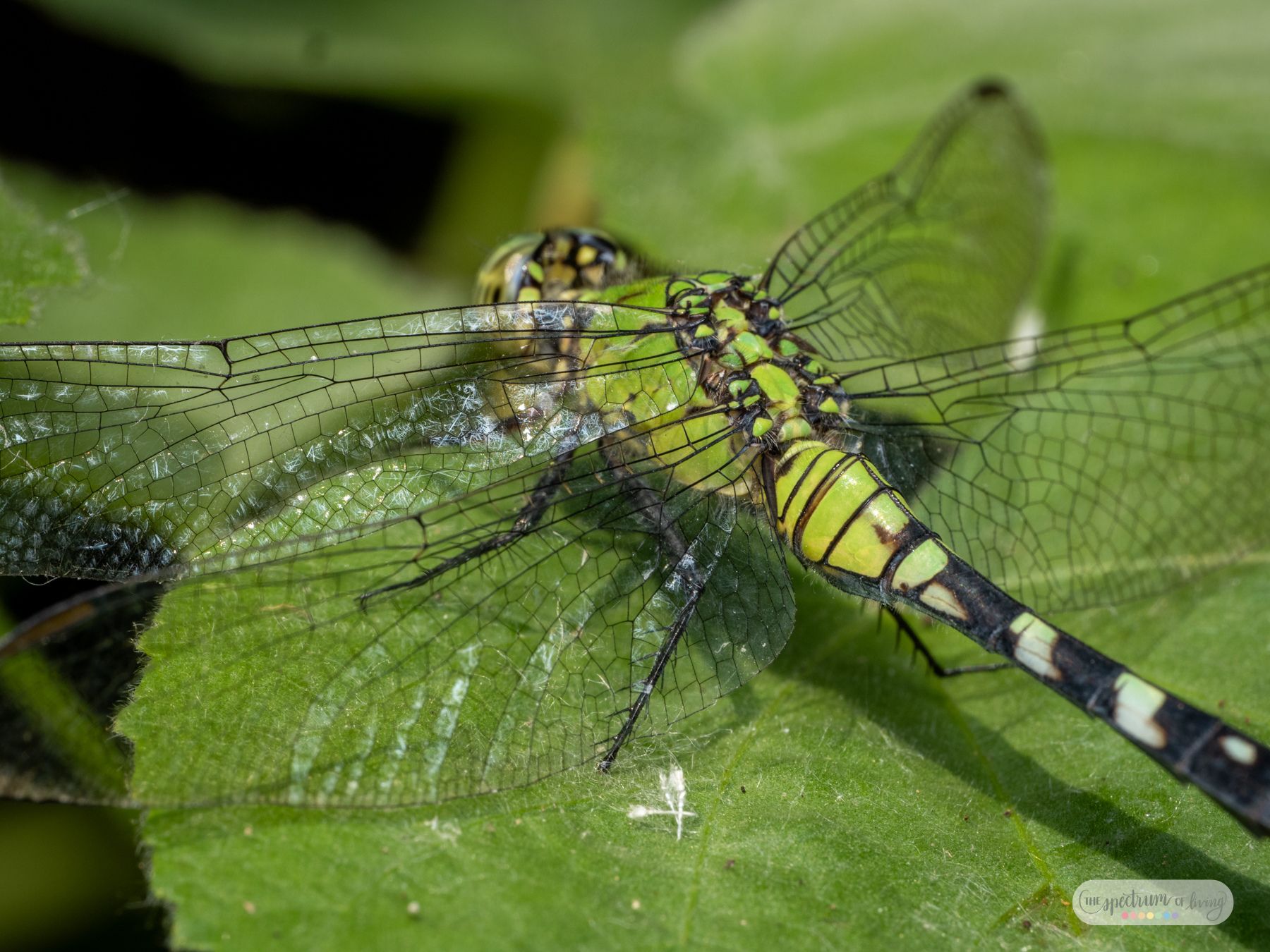

The base of the wings (where the wing meets the body) and how the wings are held are two more things to compare.
Dragonfly wings are wide at the base. At rest, dragonflies hold their wings out to the side and spread them out. Forget spread eagle, this is “spread dragonfly”.
Damselflies have a narrow, tapered attachment point at the base of their wings. They hold their wings together over the top of their bodies.
Because we’re talking wings, I’d like to mention that dragonflies are stronger, more agile fliers than less-controlled, weaker damselflies. This is predominantly due to the overall thickness of the dragonflies’ wings and their attachment points.
Nymphs
This last tip is optional. It won’t be helpful with differentiating adults, but I did want to mention it. You know, just in case you want to identify nymphs (or, like me, you’re an absolute wildlife nerd and actually think all of this is interesting)!
To become the flying, bug-eyed beauties we know, love, and have been learning about this whole time, dragonflies and damselflies have to go through a period of intense growth and development. The nymph stage is a period of underwater development that can last a wide range of time, from months to years. This stage involves a whole lot of feeding and shedding.
Dragonfly and damselfly nymphs have some key differences regarding body shape, size, gills, and swimming.
Dragonfly nymphs are generally larger overall with a rounder, more robust body.
To breathe underwater, dragonfly nymphs have internal anal gills that function by pulling water into their bodies through the anal opening. This tactic doesn’t just allow for breathing. They also use this method of expelling water quickly as a jet for propulsion when swimming.
Damselfly nymphs are usually smaller overall with a longer, more slender appearance. Damselfly nymphs’ gills are located outside of their body at the tail end, in a three-part feather or leaf-like structure. They also use their gills for swimming, swooshing the tail-like appendages from side-to-side.
Visual Guide
I hope this helps you in attempting to differentiate these lively insects.
These are broad generalizations that are usually correct. But, like most rules, keep in mind there are some exceptions — at least a few species exist that break these rules!
On your next adventure, see if you can use this guide to help you tell the difference.
Let me know if it worked!
Tell me — Which one did you spot and how did you identify it?


Leave a comment