
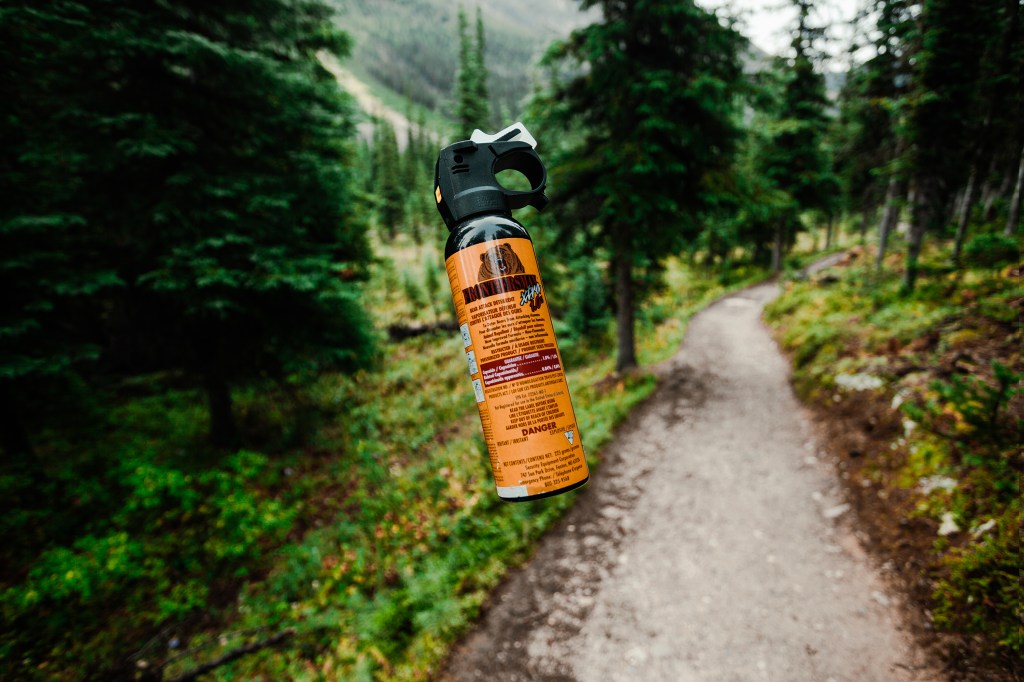
What Is Bear Spray?
Bear sprays are made to decrease the likelihood of contact between you and an aggressive bear. These concentrated mixtures with long-range shooting capabilities are meant to divert and distract a charging bear.
The main active ingredient in bear spray is capsaicin (and related capsaicinoids).
Capsaicin is the chemical compound naturally occurring in chili peppers, making them spicy.
Bear Spray Buy Guide
There are some important things to consider when choosing a suitable bear spray to carry with you on your next trip into the great outdoors.
Bear spray is NOT pepper spray.
Pepper spray is not a replacement for bear spray. A higher concentration of capsaicin and a longer shooting range are some of the reasons bear spray is actually effective against charging bears.
Look at the labels.
Suitable bear sprays will have bear-specific labeling and EPA numbering on the can.
Check the percentage of capsaicin and related capsaicinoids, which should be clearly labeled — these always need to be between 1% – 2%.
Distance and time are paramount.
Never buy a can of bear spray without confirming the distance range and the length of time the can sprays. The minimum recommended spray distance is 25 feet with a minimum spray time of 7 seconds.
When & How To Use Bear Spray
Practice & Placement
Spraying a charging bear is a fast-paced situation that requires quick, non-hesitant action. It is best to go through the motions and practice spraying in advance so it becomes reflexive. This includes getting familiar with the can’s safety feature. Usually bear spray cans have a safety clip that is pulled back towards you with your thumb. Always carry your spray with the safety clip in place to prevent accidental spray.
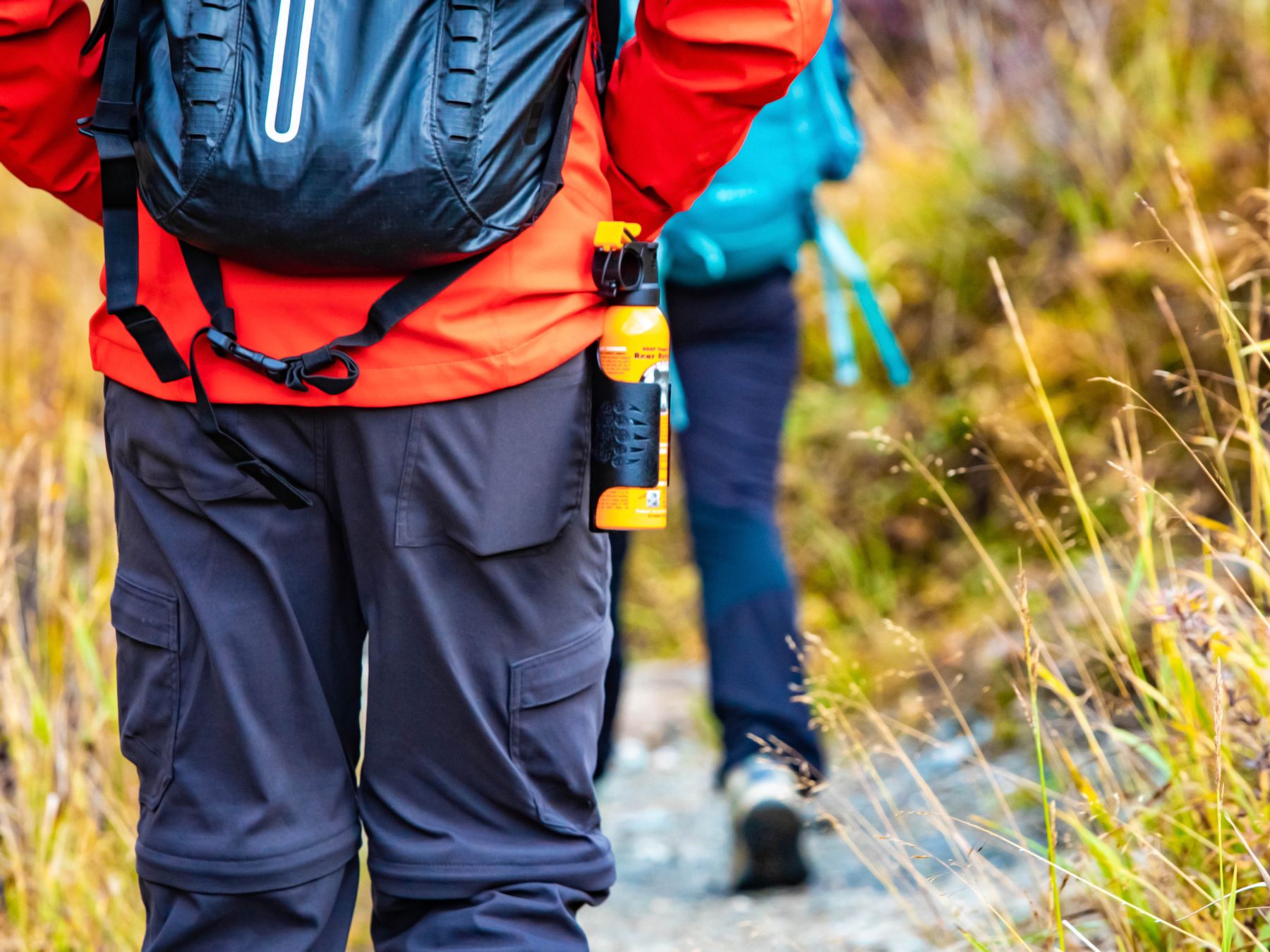
Carry your spray in a readily accessible spot — you won’t be able to reach it fast enough from your backpack. Some popular options include hip holsters and chest holsters.
Make sure you can quickly grab it if needed.
If you’re hiking in a group, it is recommended that everyone have their own can of bear spray.
When should I spray?
Bear spray should only be sprayed towards a bear (or other wild animal) that is charging at you. Spraying a non-aggressive bear is unnecessary and can provoke it to attack.
Spray when the aggressive bear is within 60 feet of you or has made contact with you.
How should I spray?
When an agitated, charging bear is within 60 feet of you, direct the spray slightly downwards and in front of the bear. Spray for 1 – 2 seconds and aim for about 30 feet away from you.
Because bear spray forms an expanding cloud, you do not have to be precise with your aim. The bear will be affected by running through the cloud.
If a charging bear is within 30 feet of you, do not hesitate to spray.
If a bear is going to make contact with you, or already has, access your spray as quickly as possible and spray towards the bear’s face.
The best position to be in during a bear attack is face down with your hands clasped, protecting the back of your neck. Continue holding the can and spraying behind your head, towards the bear.
The bear may roll you, drag you, shake you, slap you, or bite you. Even if the bear rolls you, always roll over to remain on your stomach with your back facing up.
If your friend is attacked, spray towards the bear and your friend.
Never Do This With Bear Spray
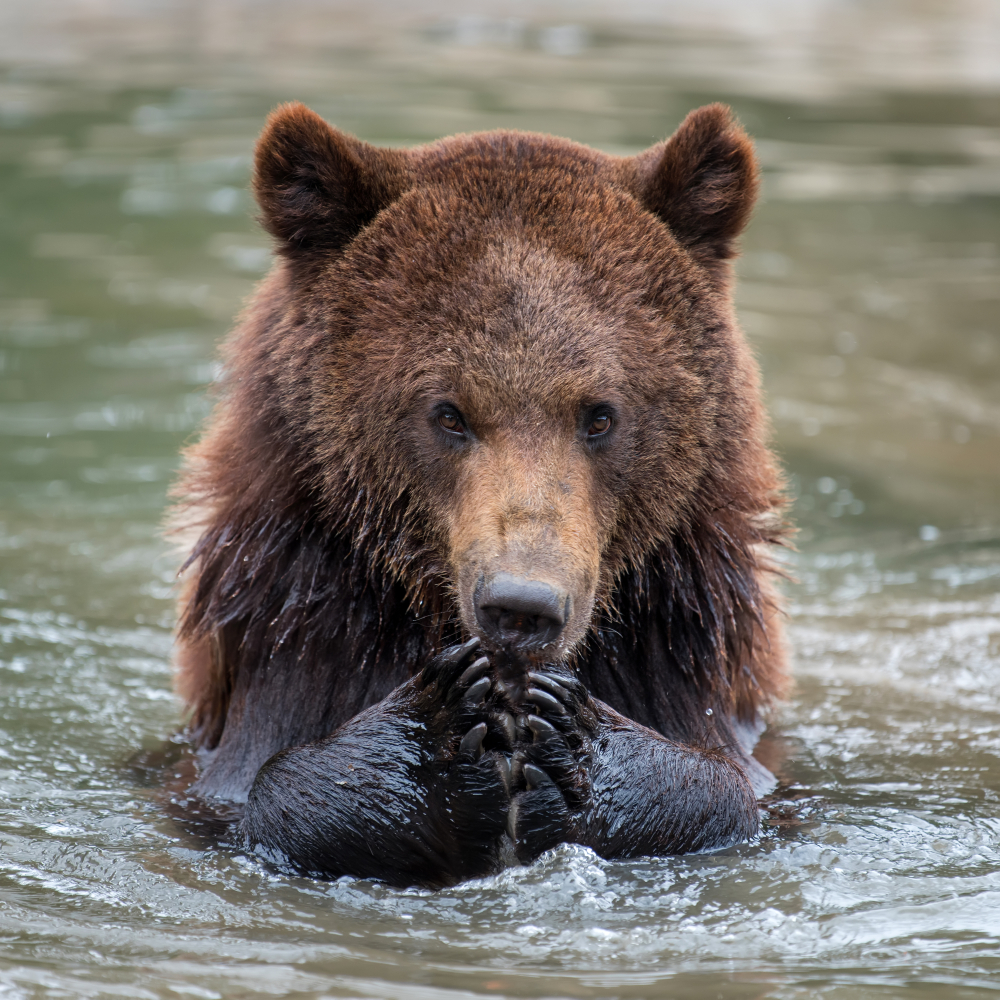
Never use bear spray on non-threatening animals.
Bear spray is only meant for aggressive animals that are charging you. Spraying a passive bear, or other passive animal, can cause the animal to turn aggressive and attack.
Never use bear spray like a repellent.
Never apply bear spray to your clothing, your body, or your equipment. This can have the opposite effect and attract bears. This is not the intended use of bear spray.
Never intentionally spray a human with bear spray.
Bear spray sprays quickly (sometimes above 70 mph) and can cause permanent eye damage.
Never take bear spray on an airplane.
Bear spray is never allowed on airplanes. Check your destination to see where bear spray can be purchased. You can also look into mailing bear spray to your destination as a hazardous material.
Never store bear spray in unstable temperatures.
Don’t store bear spray below freezing or above 120° F for long periods of time.
How Does Bear Spray Affect Bears?
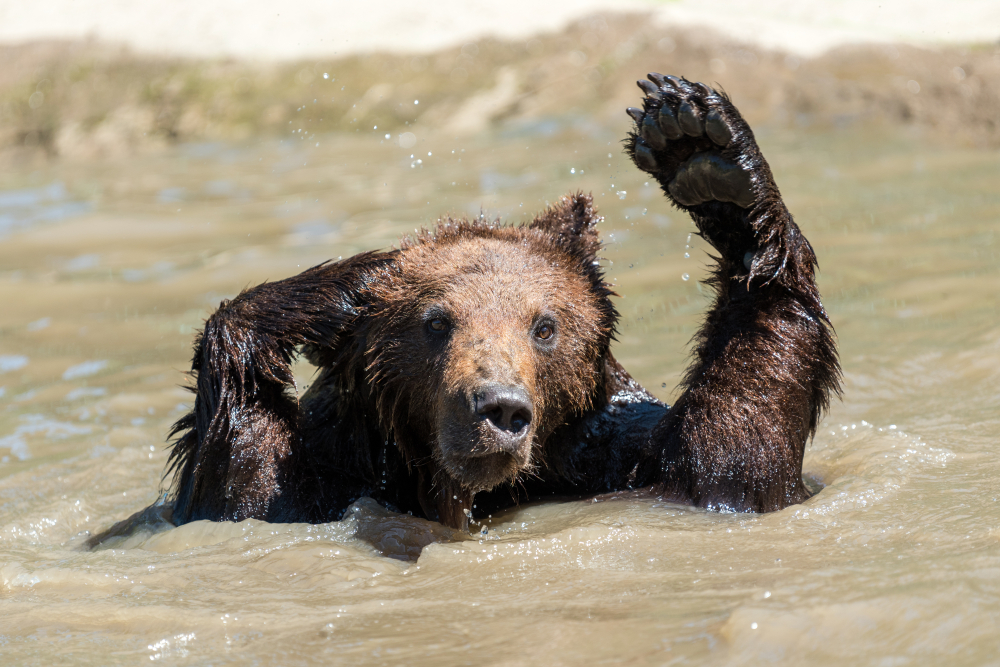
When bears enter the cloud of spray, they breathe in capsaicin and almost immediately feel sensory discomfort.
The nose, eyes, ears, lungs, throat, and mouth of the bear become inflamed in response to contact with capsaicin.
Narrowing of airways cause coughing, choking, reduced air capacity to the lungs, and reduced sense of smell. Vision is blurred and hearing capacity is reduced.
All of the symptoms caused by the spray are what makes bear spray effective. The purpose of disrupting the bear’s senses and focus is to divert it from its potential attack. This reduces its chance of contact with you.
For all of my fellow sensitive beings and wildlife lovers, I want you to know: this causes no permanent harm to the bear! Despite being uncomfortable, these effects are only temporary. Plus, this period of discomfort is a way better scenario than you getting attacked and the bear being killed.
How To Lessen the Likelihood of a Bear Encounter
It is strongly recommended to carry bear spray in areas where bears are present. However, there are other things to keep in mind to reduce the chances of encountering a bear.

Remain vigilant.
When exploring outdoors, always remain aware of your surroundings. Areas with water sources, food sources, or thick ground cover (rivers, streams, fruit bushes, thickets, etc.) pose greater risk of encountering a bear. When entering these high risk areas, go on high alert. Pause. Look around slowly and carefully. Smell the air for potential odors from a bear or its prey.
Make your presence known.
Another behavior that helps diminish the chances of a bear encounter is making noise. Intermittently, especially when entering high risk areas, call out in an even-toned, non-threatening way to make any bears aware of your presence. Alternatively, you can clap. These noises encourage bears to move away from you rather than surprising them, which is when most unfavorable encounters occur.
Store food properly.
Proper food storage is essential for decreasing the likelihood of a bear encounter. When bears identify a source of food, they will return to the area. In general, you should never store open food in your tent or backpack. Check rules and regulations for food storage with any parks or campgrounds you may be attending. Some require food locker storage while others allow car storage with windows closed. Backpackers and overnight campers should always have air-tight food storage.
Be responsible with wildlife.
If you do see a bear, never intentionally approach it or interact with it. In general, wildlife should never be harassed and should always be left alone.
Using proper safety and prevention techniques reduce chances of human injury during bear encounters and save the lives of bears.
Stay safe and educated to protect yourself and wildlife!


Leave a comment